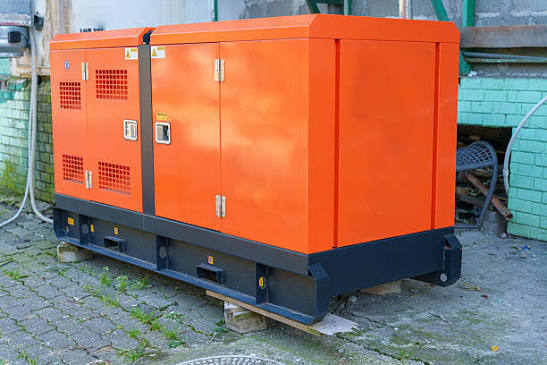
Renting a generator is often the smartest way to secure temporary or backup power. It avoids the high cost of ownership, gives access to well-maintained equipment and allows businesses to scale capacity up or down as projects change. However, the value of a rental depends heavily on what the agreement actually covers.
Two quotes for what appears to be the same generator can differ significantly in price, and the reason is usually hidden in the details. One may include delivery, installation, cabling, fuel management and round-the-clock technical support. Another may cover only the machine itself, leaving the customer to arrange and pay for everything else.
Understanding the typical contents of a generator rental agreement helps you compare quotes fairly, avoid unexpected charges and make sure responsibilities are clear before the equipment arrives. This guide explains the clauses you are most likely to see, the questions worth asking and the warning signs to look out for. It is intended as general guidance, so for significant contracts, it is always wise to seek appropriate legal or commercial advice.
The agreement should clearly identify the equipment being rented. This usually includes the generator's size in kVA, its prime and standby ratings, voltage and phase, fuel type, noise level and any unique identifier such as a model or serial number.
It should also list any additional equipment supplied with the generator. This may include power cables, distribution boards, automatic transfer switches, external fuel tanks, cable ramps and spill kits. If an item is not listed, do not assume it is included.
The contract will state the start and end dates of the rental. It should also explain how the rental period is measured, for example whether charges begin on the day of delivery or the day the generator is first used, and whether weekends and public holidays are included.
Check what happens if you need to extend the rental or return the equipment early. Some agreements allow flexible extensions at the same rate, while others apply different pricing or require advance notice.
Rental pricing can be structured in several ways:
The agreement should clearly show what is included in the rental rate and what is charged separately.
Transport can be a significant cost, particularly for large generators that require specialist vehicles or cranes. The agreement should state whether delivery and collection are included, whether there are charges for out-of-hours delivery and who is responsible for lifting and positioning the unit.
Installation is another key area. Does the price include connecting the generator to your building or distribution system, testing and commissioning? Many connections must be made by qualified electricians, and the agreement should state who provides them.
Fuel arrangements vary widely. Common options include:
The agreement should also specify the fuel level at delivery and return, and any charges if the generator is returned with less fuel than it arrived with.
For longer rentals, generators require routine servicing based on running hours, typically including oil and filter changes. Most agreements state that the supplier is responsible for scheduled maintenance, while the customer is responsible for daily checks such as fuel and coolant levels, or for reporting warning lights promptly.
Clarify who pays for servicing, how much notice will be given before a service visit and whether the generator will be temporarily switched off during maintenance.
This is one of the most important parts of any agreement. It should explain how to report a fault, whether support is available 24 hours a day and the expected response time for a technician to arrive on site.
For critical applications, look for commitments on replacement equipment if the generator cannot be repaired quickly. Some agreements include an on-site technician for events or high-risk operations, often charged separately.
The agreement will usually set out what the customer must do. Typical obligations include:
Rental agreements normally specify who is responsible for loss or damage to the equipment during the rental period. In many cases, the customer is responsible from delivery until collection. The supplier may require proof of insurance or offer a damage waiver for an additional fee.
The agreement will also usually include limits on the supplier's liability, for example for indirect losses such as lost revenue if the generator fails. Read these clauses carefully and consider whether your own insurance covers the gap.
Expect a clause describing the condition in which equipment must be returned and how damage or missing items will be charged. Taking photographs at delivery and collection, and signing a condition report, helps avoid disputes later.
Many agreements include requirements related to safe operation, earthing, exhaust placement, fuel storage and spill prevention. Some suppliers provide bunded tanks, spill kits and safety documentation such as risk assessments and method statements.
The contract will set out payment terms, deposits, invoicing frequency and late payment charges. It should also describe the conditions under which either party can end the agreement, such as non-payment, misuse of equipment or failure to provide the agreed service.
Be cautious if a quote is significantly cheaper than others without a clear explanation. Low headline prices sometimes exclude delivery, cables, installation or support. Other warning signs include vague equipment descriptions, no stated response time for breakdowns, unclear fuel charges and reluctance to provide safety documentation or maintenance records.
A generator rental agreement is more than a price for a machine. It defines the equipment, the rental period, how pricing works, who handles delivery, installation, fuel and maintenance, how breakdowns are handled and who carries the risk if something goes wrong.
Reading these terms carefully, and asking the right questions, allows you to compare quotes on a like-for-like basis and avoid unpleasant surprises. A professional generator rental service will be happy to explain every clause, tailor the package to your project and put responsibilities in writing, so both parties know exactly what to expect from delivery day to collection.

This post has been authored and published by one of our premium contributors, who are experts in their fields. They bring high-quality, well-researched content that adds significant value to our platform.











Student Advice provides useful education, study, career, and student life guidance to help learners make informed decisions and achieve their goals.